
15 Fascinating Rome Facts zou Probably Didn't Know (Even If You've Been Before)
Rome is a city that never stops surprising. Beyond its famous landmarks lies a world of hidden stories, ancient engineering, and curious traditions that many visitors never discover.
That’s one of the reasons why small group tours of Rome offer such a different experience. Instead of simply checking off famous attractions, you get to understand the stories that have shaped the Eternal City for more than 2,000 years.
Here are 15 fascinating facts that will make you see Rome from a completely different perspective.
Small Group Tours of Rome – did you know these?
1. Rome has more than 900 churches
Rome is home to more than 900 churches, making it one of the world’s richest cities in terms of religious and artistic heritage.
Many of them are free to enter and house masterpieces by artists such as Caravaggio, Bernini, Raphael, and Michelangelo. Some of the city’s greatest treasures are hidden behind simple church facades that many visitors walk past without noticing.
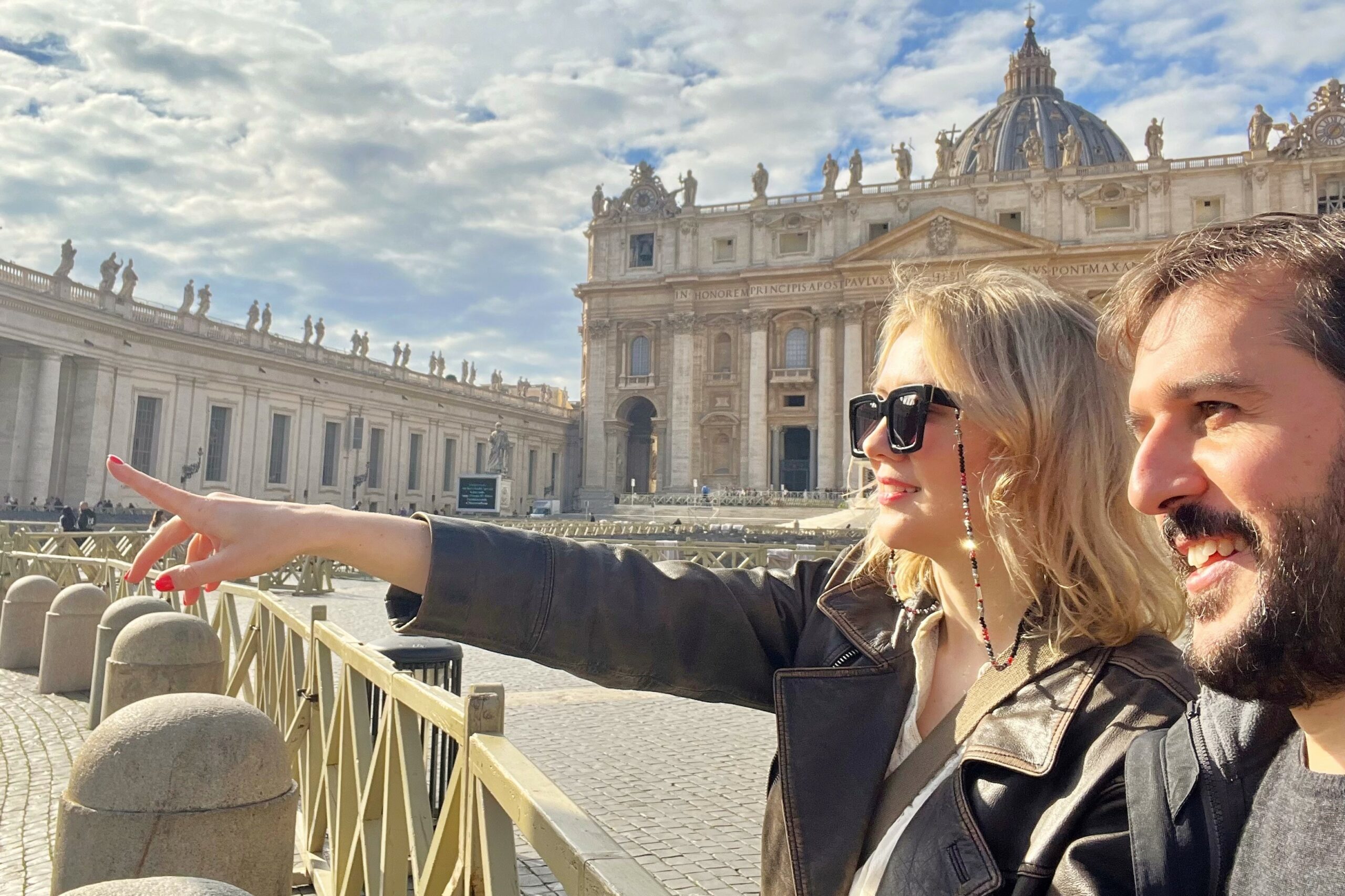
St. Peter’s Basilica and Square Tour
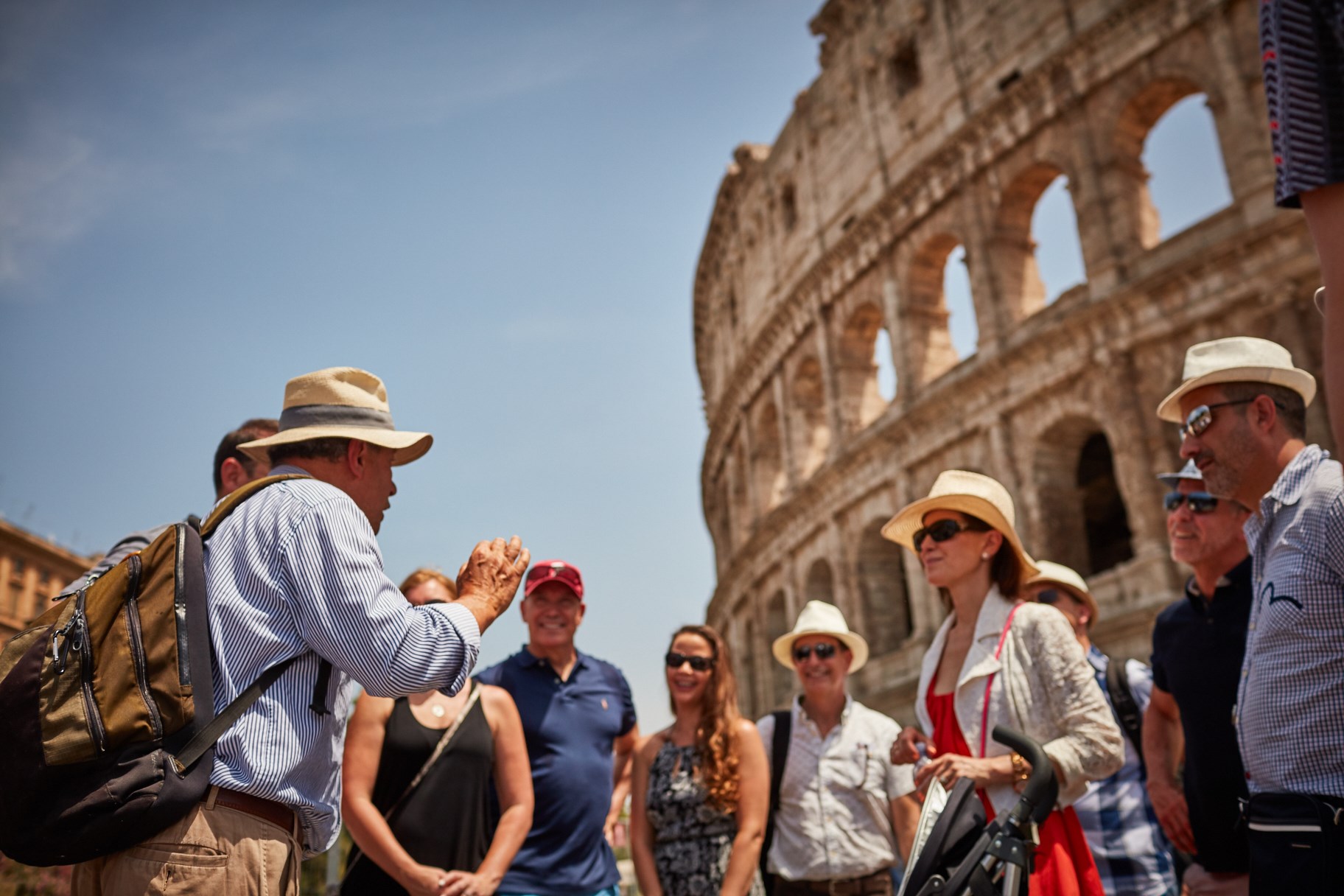
2. The Colosseum wasn’t named for its size
Most people assume the Colosseum earned its name because it is enormous.
In reality, the name comes from the Colossus of Nero, a gigantic bronze statue of Emperor Nero that once stood beside the amphitheater. Although the statue disappeared centuries ago, its name lived on.
Ancient Rome and Colosseum Tour
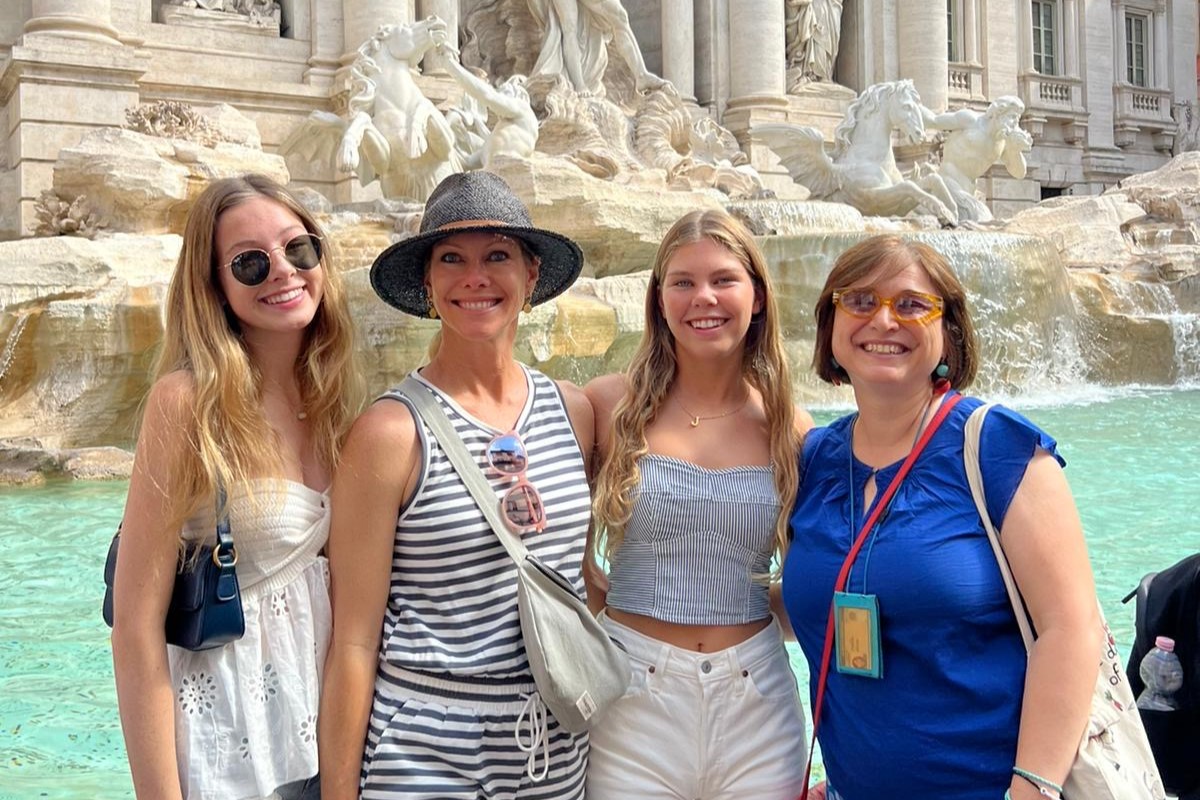
3. Trevi Fountain isn’t Rome’s oldest fountain
The Trevi Fountain is undoubtedly Rome’s most famous fountain, but it isn’t the oldest.
Several ancient fountains, supplied by Roman aqueducts that are still functioning today, existed long before Trevi was completed in the 18th century. Rome’s water system remains one of the greatest engineering achievements of the ancient world.
Highlights and Hidden Jewels – Walking Tour of Rome
4. Rome has its own ancient Pyramid
Few visitors expect to find an Egyptian-style pyramid in the Italian capital.
The Pyramid of Cestius was built over 2,000 years ago as a monumental tomb for the Roman magistrate Gaius Cestius. It reflects the fascination Romans developed with Egyptian culture after the conquest of Egypt.
5. Piazza Navona still follows an ancient stadium
The elegant oval shape of Piazza Navona isn’t accidental.
The square was built directly over the Stadium of Domitian, where athletic competitions were held nearly 2,000 years ago. Walking through Piazza Navona today means following the exact outline of the ancient arena.
6. The Pantheon has the world’s largest unreinforced concrete dome
Nearly two millennia after its construction, the Pantheon’s dome remains the largest unreinforced concrete dome ever built.
Modern engineers still admire the Romans’ ability to create such an extraordinary structure using techniques that continue to inspire architects today.
7. You can still walk on a 2,300-year-old road
The Appian Way (Via Appia Antica) was one of the most important roads of the Roman Empire.
Built in 312 BC, parts of the original basalt paving stones can still be walked on today, allowing visitors to literally follow in the footsteps of Roman soldiers, merchants, and emperors.
8. Ancient Romans invented Fast Food
Think fast food is a modern invention?
Ancient Romans regularly ate at thermopolia, small street-side food shops serving hot meals and drinks to busy residents. Some remarkably well-preserved examples can still be seen in Ostia Antica, Rome’s ancient port city.
Rome Food Tours
9. Romans simply called it “the Forum”
Today we know it as the Roman Forum.
To ancient Romans, however, it was simply the Forum: the political, commercial, and social heart of the city where everyday life unfolded.
10. Rome has more than 60 catacombs
Beneath the city’s streets lies an extraordinary underground world.
Rome contains more than 60 known catacombs stretching for hundreds of kilometers, although only a small number are open to visitors. These underground cemeteries preserve some of the earliest chapters of Christian history.
Underground Rome – Catacombs Tour
11. Trastevere was once considered a separate town
Today Trastevere is one of Rome’s most beloved neighborhoods.
For centuries, however, it was viewed almost as a city of its own, separated from central Rome by the Tiber River and known for its multicultural population, artisans, and merchants.
12. Rome’s Jewish Ghetto is one of the oldest in the world
Established in 1555, the Jewish Ghetto is one of the oldest surviving Jewish quarters anywhere.
Today it is known not only for its remarkable history but also for its distinctive cuisine, where centuries-old Jewish and Roman culinary traditions come together.
13. The Mouth of Truth was probably a drain cover
The famous Bocca della Verità attracts thousands of visitors every day.
Despite the legend that it bites the hands of liars, historians believe it was originally a large ancient Roman drain cover or manhole, later transformed into one of Rome’s most famous legends.
14. Castel Sant’Angelo was never meant to be a castle
One of Rome’s most recognizable landmarks began life as something completely different.
Emperor Hadrian built Castel Sant’Angelo as his monumental mausoleum. Only centuries later was it converted into a fortress, papal residence, and military stronghold.
15. One keyhole lets you see three different states
One of Rome’s best-kept secrets can be found on Aventine Hill.
Looking through the famous Keyhole of the Knights of Malta, you can see St. Peter’s Basilica perfectly framed by a garden. In a single glance, you’re looking through the territory of the Sovereign Military Order of Malta toward Vatican City while standing in Italy, a unique view that connects three sovereign entities.
Discover the Stories Behind Rome
These fascinating facts are just a glimpse into what makes Rome unlike any other city in the world.
While it’s easy to admire Rome’s monuments on your own, understanding the stories behind them brings the city to life. That’s why many travelers choose small group tours of Rome: they combine expert local knowledge, hidden details, and authentic experiences that transform famous landmarks into unforgettable memories.
After all, in Rome, every street, monument, and neighborhood has a story waiting to be discovered.
You may also like:
- How to Avoid Tourist Traps in Rome (Without Missing a Thing)
- Rome Beyond the Colosseum: Discover Hidden Gems with a Local Guide

Book Now
Embark on a Fully Private Tour through the rich Culinary Traditions of Rome | Explore the vibrant Campo de' Fiori Market and the historic Jewish Quarter | 8 delicious Food Tastings included!
Book Now
Wander through must-see highlights of Rome with a local twist | Visit Piazza Navona, Trevi Fountain, Spanish Steps and much more, at your own pace | Entry Tickets to the Pantheon and Coffee Tasting included
Book Now
Discover the wonders of the Vatican on a fully personalized Private Tour | Visit the Vatican Museums, Sistine Chapel and St. Peter's Basilica at your own pace | Skip-the-line Entry Tickets included!

Book Now
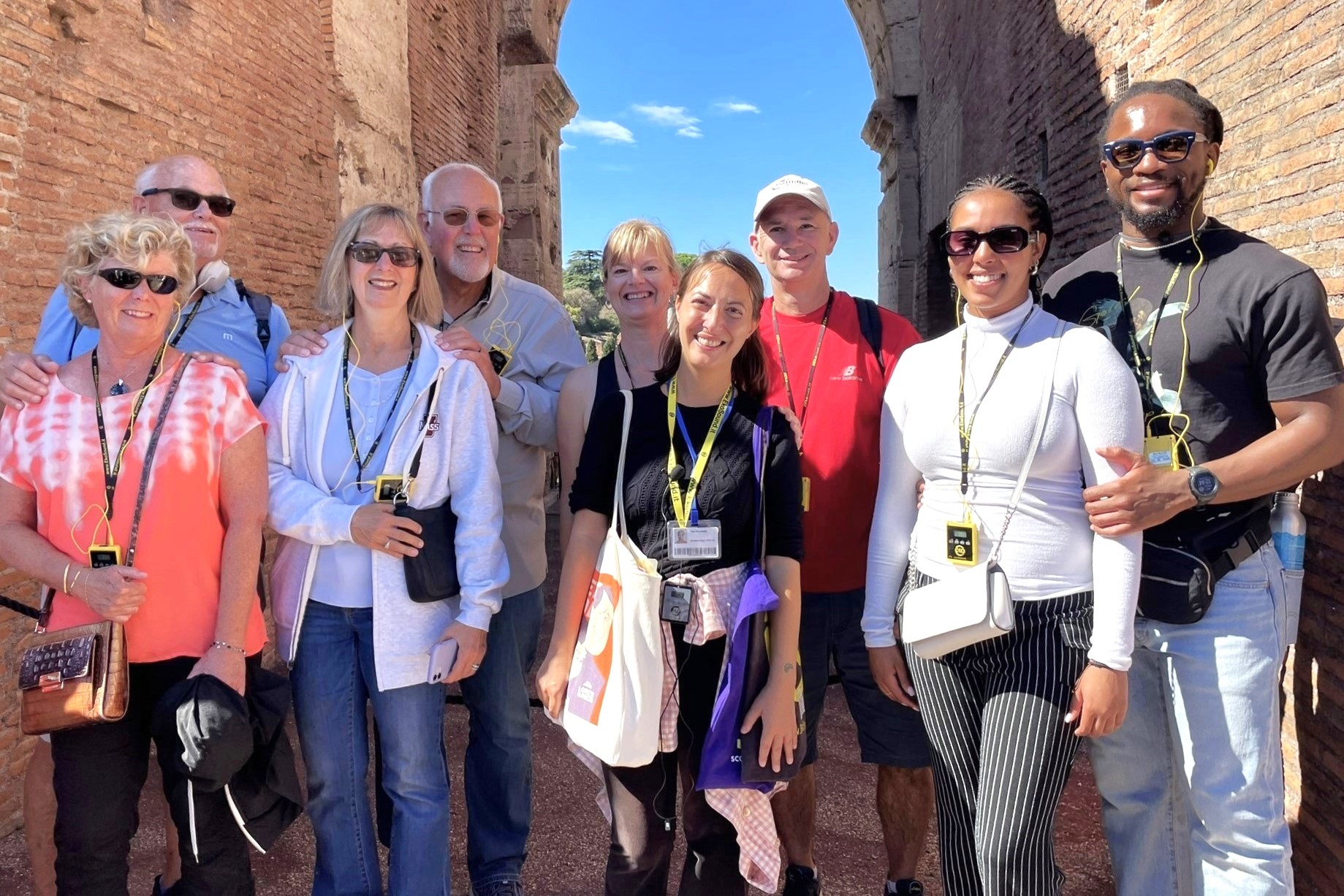
Discover the wonders of Ancient Rome with a Top-rated Guide | Visit the Colosseum, Roman Forum and Palatine Hill with an intimate group of up to 6-8 people | Entry Tickets included!
Book With Extra Flexibility
Choose new departure dates if your plans change.
Reach out to us anytime via online chat, phone or email.
Get credit for future trips if you need more time to decide.
Change to a different tour run by the same tour operator.